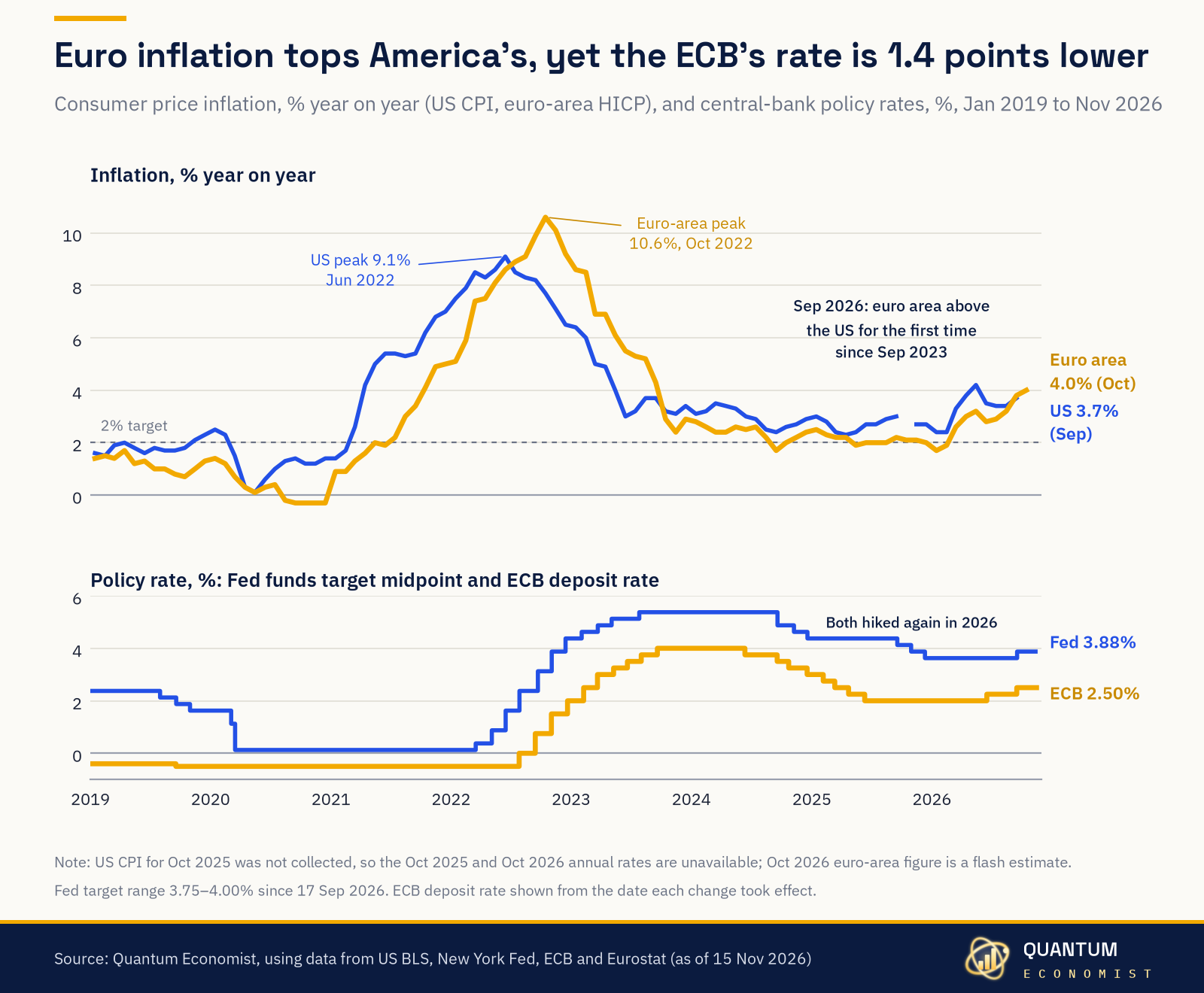
In September euro-area inflation (3.8%) rose above US inflation (3.7%) for the first time since September 2023, and the October flash puts it at 4.0%. Yet the ECB deposit rate is 2.50% against a Fed midpoint of 3.88%, leaving euro-area real rates at about −1.5%.
· Source: Quantum Economist, using data from the US BLS, New York Fed, ECB and Eurostat
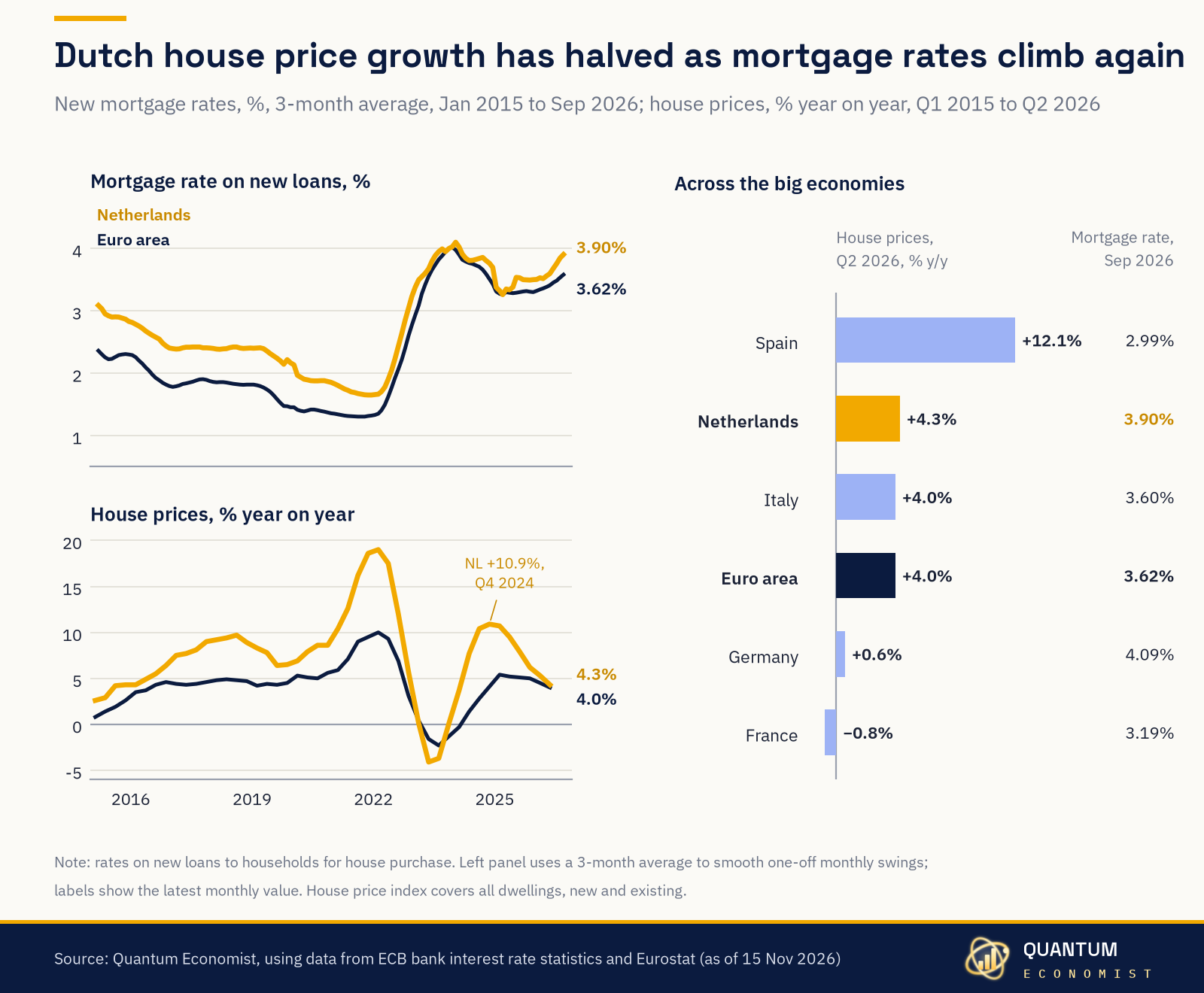
Dutch house prices rose 4.3% in the year to Q2 2026, down from 10.9% in Q4 2024, as new mortgage rates climbed from about 3.5% to 3.90% in September. Across Europe the pattern holds: Spain has the cheapest mortgages and the fastest price growth, Germany the dearest and prices barely moving.
· Source: Quantum Economist, using data from the ECB and Eurostat
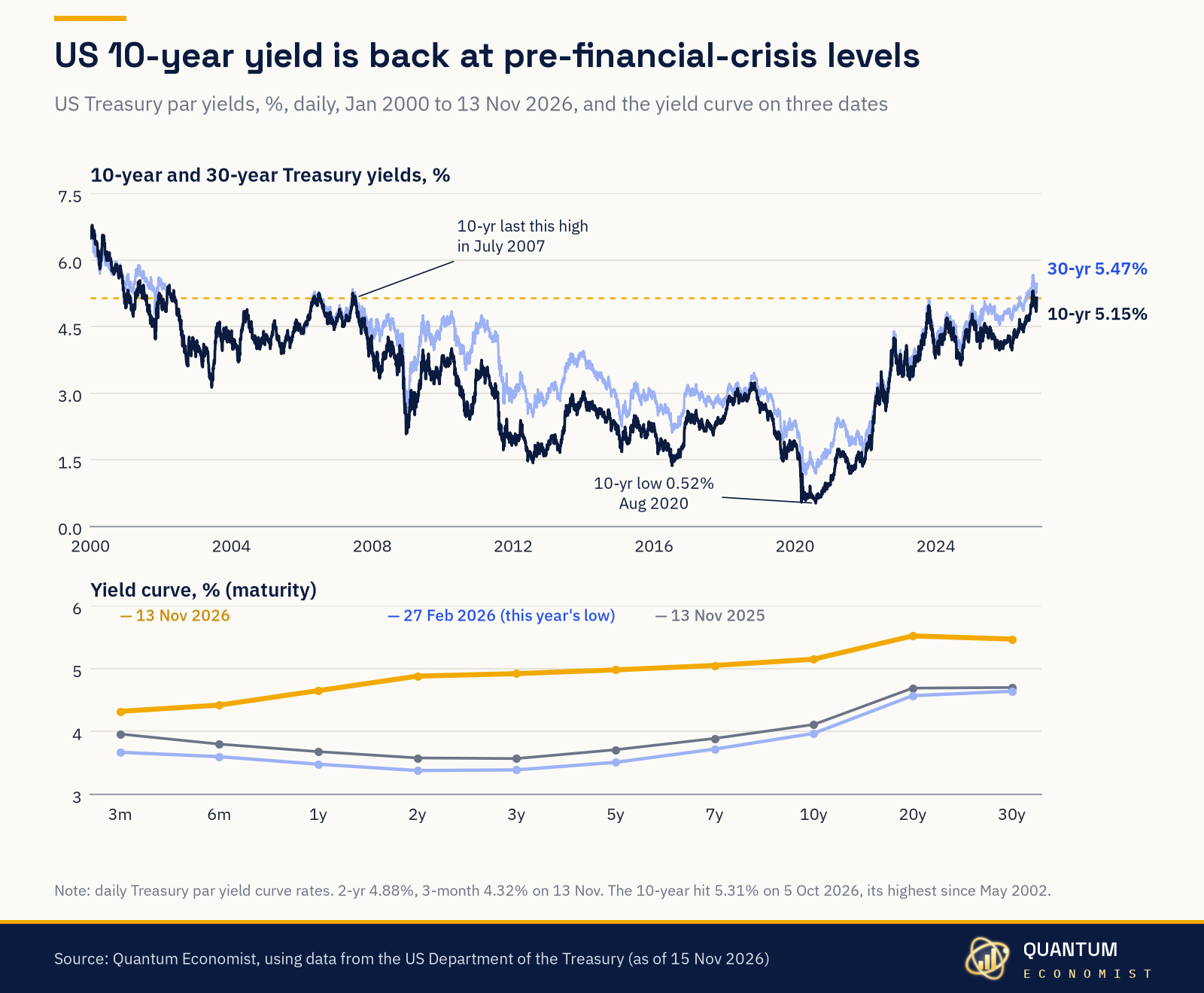
The 10-year Treasury yield closed at 5.15% on 13 November, up from 3.97% in February. Before this year it was last that high in July 2007. The 30-year yield is 5.47%, and every maturity from three months out now yields at least 4.3%.
· Source: Quantum Economist, using data from the US Department of the Treasury
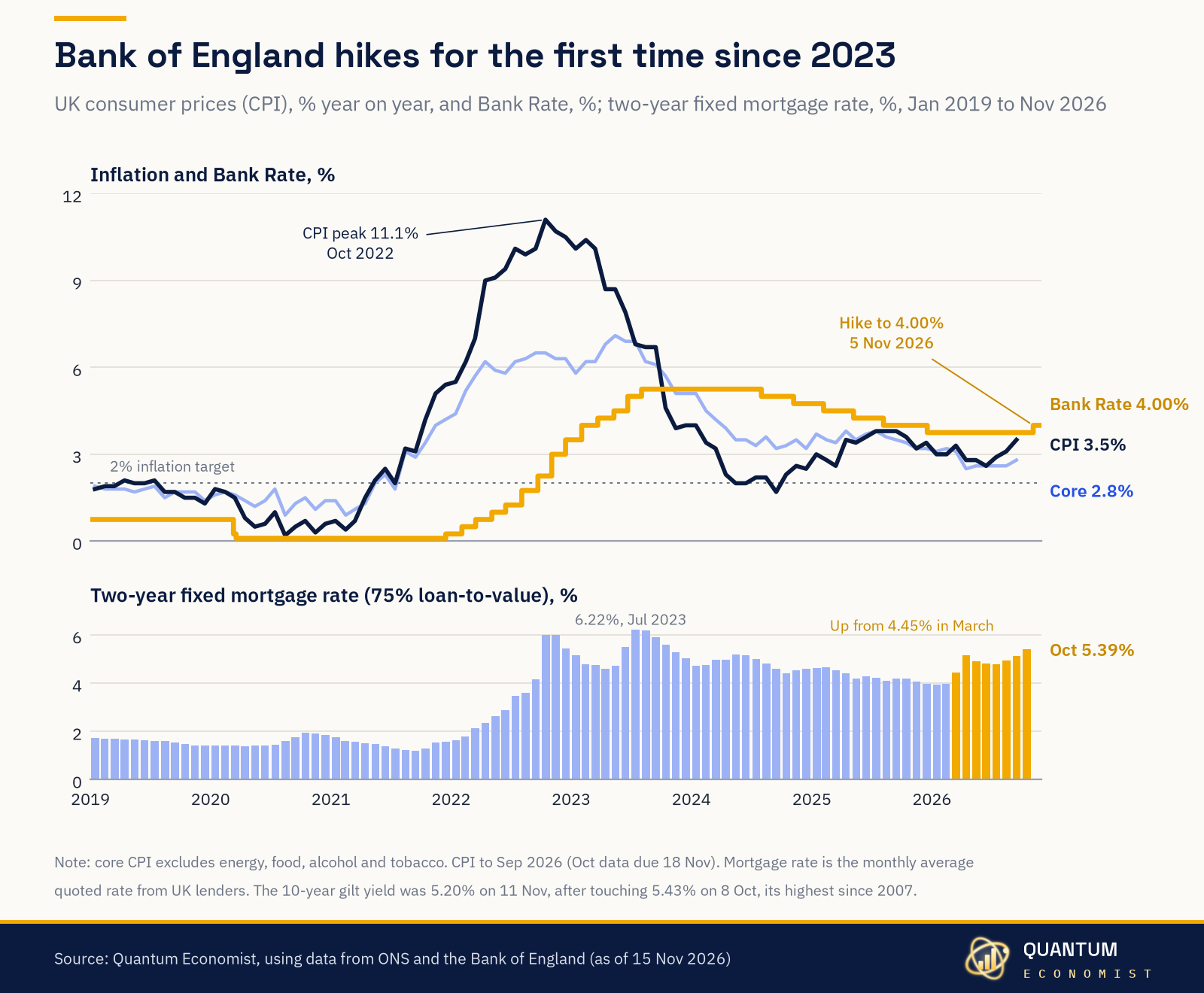
The Bank of England raised Bank Rate to 4.00% on 5 November, its first hike since August 2023, after CPI inflation climbed from 2.6% in June to 3.5% in September. Two-year fixed mortgage rates are back up to 5.39%, the highest since October 2023.
· Source: Quantum Economist, using data from ONS and the Bank of England
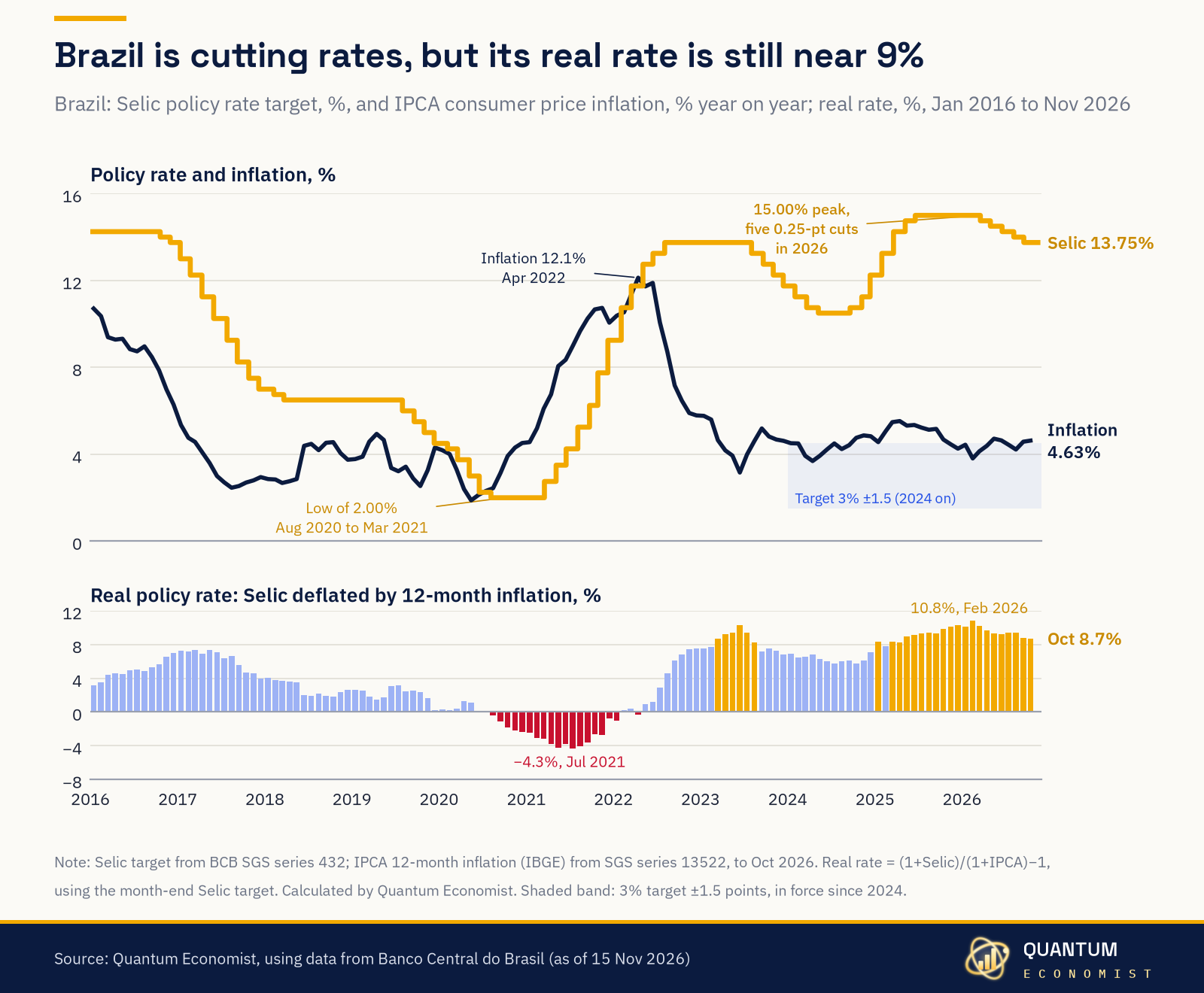
Brazil's central bank has cut the Selic five times this year, from 15.00% to 13.75%. With inflation at 4.63% in October, the real policy rate is still 8.7%, only a little below February's peak of 10.8%.
· Source: Quantum Economist, using data from Banco Central do Brasil
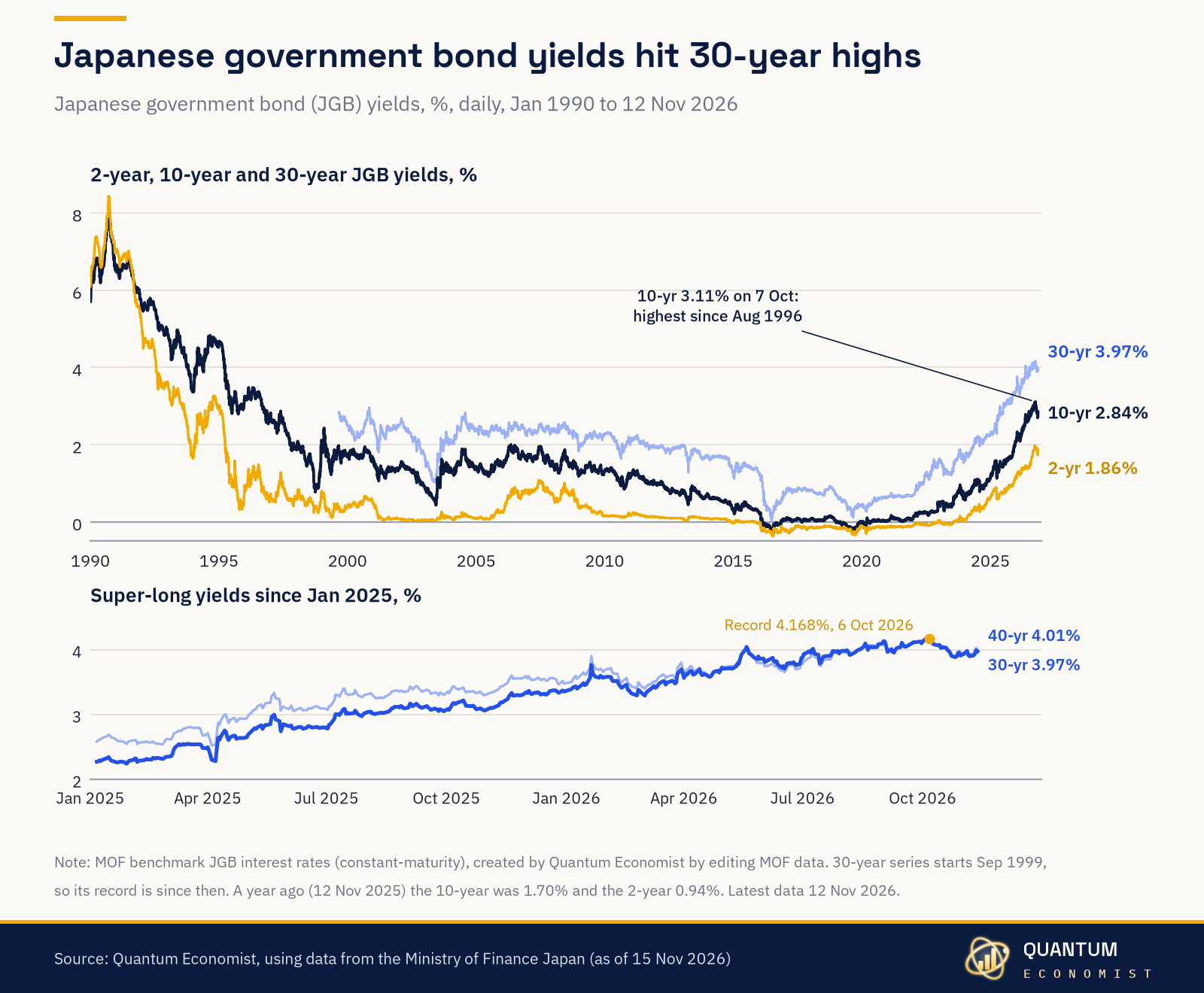
Japan's 10-year yield hit 3.11% on 7 October, its highest since August 1996, and was 2.84% on 12 November, against 1.70% a year earlier. The 30-year yield set a record of 4.17% in October, and the 40-year is now above 4%.
· Source: Quantum Economist, using data from the Ministry of Finance Japan
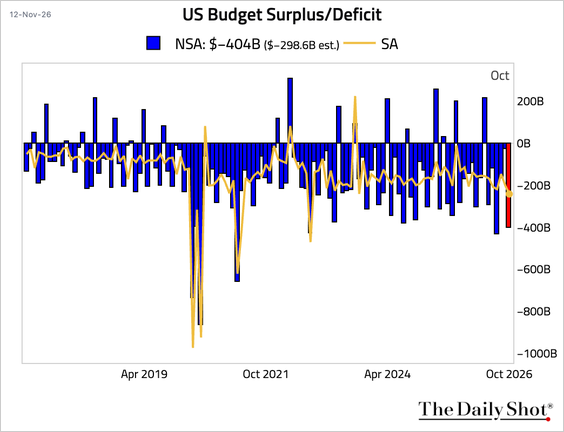
The October federal deficit came in at about $404bn, wider than expected. Heavy borrowing means steady Treasury supply and keeps pressure on long-term yields.
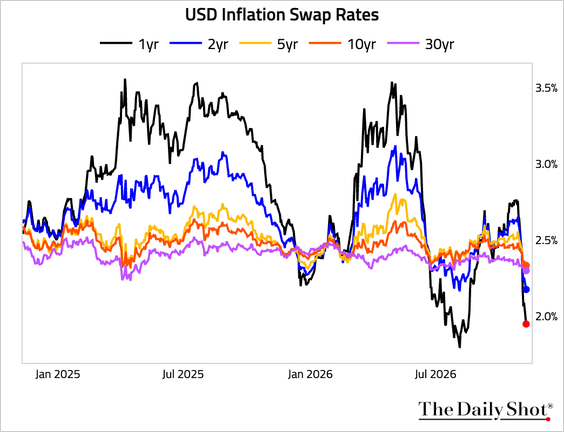
USD inflation swap rates have dropped, with the one-year rate falling hardest. Markets are pricing less near-term inflation even as broader price measures firm.
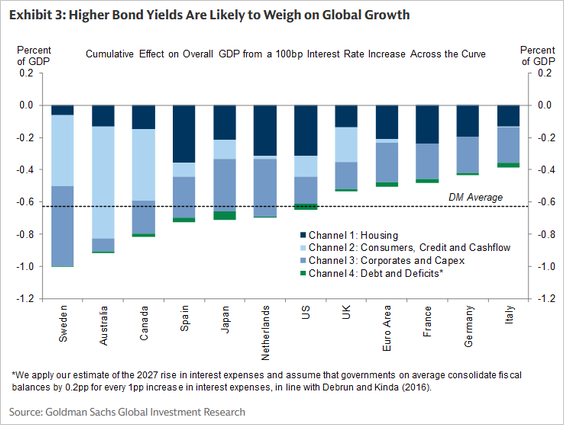
Goldman estimates that a 100bp rise in rates across the curve cuts GDP by about 0.6% on average in developed economies, through housing, consumers, companies and debt costs. Sweden, Australia and Canada look most exposed.
· Source: Goldman Sachs Global Investment Research