RatesRates
US inflation swaps fall, led by the front end
USD inflation swap rates have dropped, with the one-year rate falling hardest. Markets are pricing less near-term inflation even as broader price measures firm.
ShareEmail
USD inflation swap rates have dropped, with the one-year rate falling hardest. Markets are pricing less near-term inflation even as broader price measures firm.
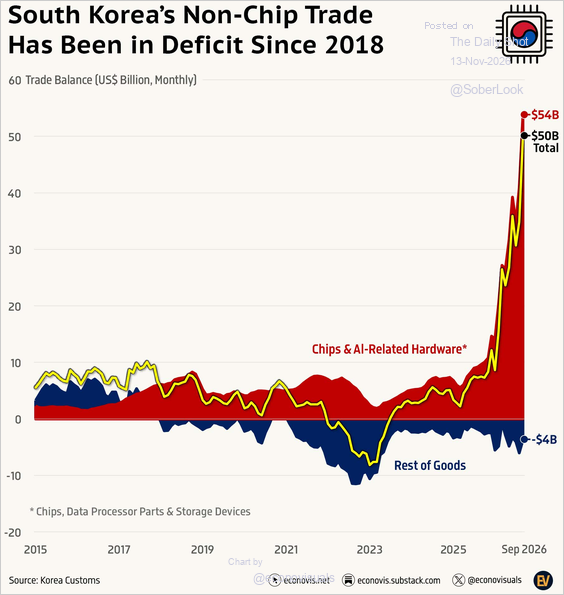
South Korea's trade surplus has come to depend on semiconductors and AI hardware, while other goods have mostly run a deficit since 2018. The AI cycle is now a major driver of Asian trade.
· Source: Korea Customs, Econovisuals
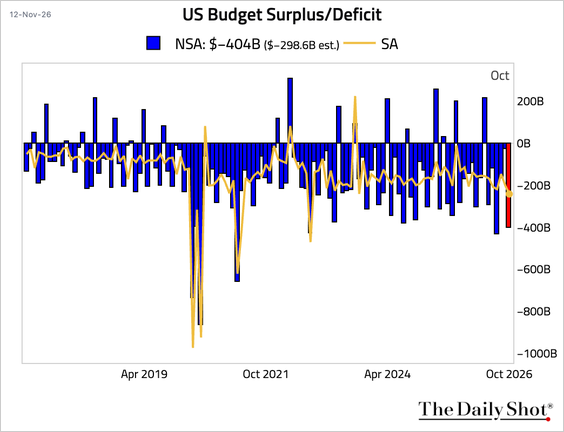
The October federal deficit came in at about $404bn, wider than expected. Heavy borrowing means steady Treasury supply and keeps pressure on long-term yields.
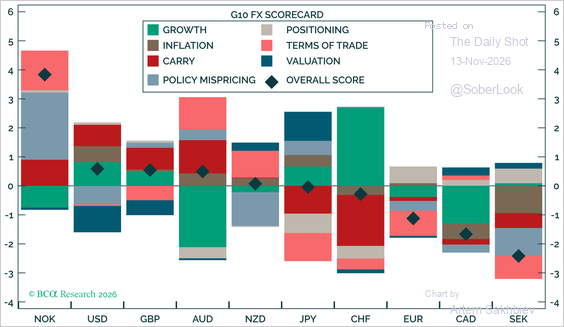
BCA Research's G10 scorecard still favours high-carry currencies, with the Norwegian krone leading by a wide margin. As an oil and gas currency, the krone is one to watch for energy-linked FX.
· Source: BCA Research
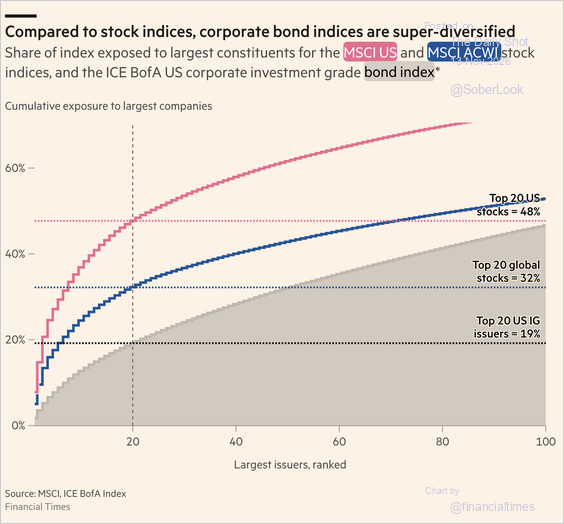
The top 20 issuers make up about 19% of the US investment-grade bond index, against roughly 48% for the top 20 US stocks. Credit carries far less concentration risk than equity benchmarks.
· Source: MSCI, ICE BofA, Financial Times
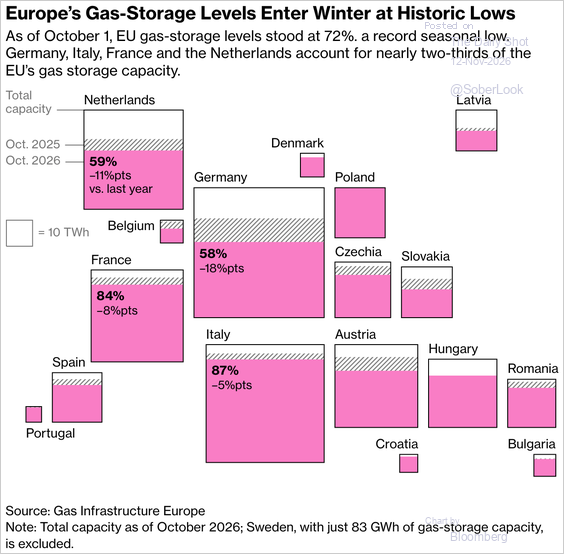
EU gas storage stood at 72% on 1 October, a record seasonal low, with Germany at 58%, 18 points below a year earlier. Thin buffers leave European gas, power and carbon more exposed to cold spells and supply shocks this winter.
· Source: Gas Infrastructure Europe, Bloomberg
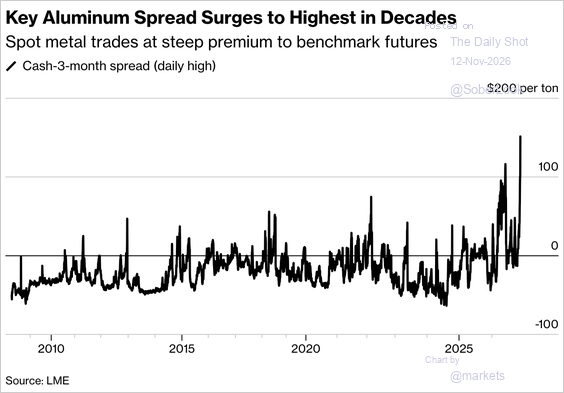
The cash-to-three-month aluminium spread has surged to its highest in decades as inventories tighten. Spot metal now trades at a steep premium to futures, a sign of real strain in the physical market.
· Source: LME, Bloomberg