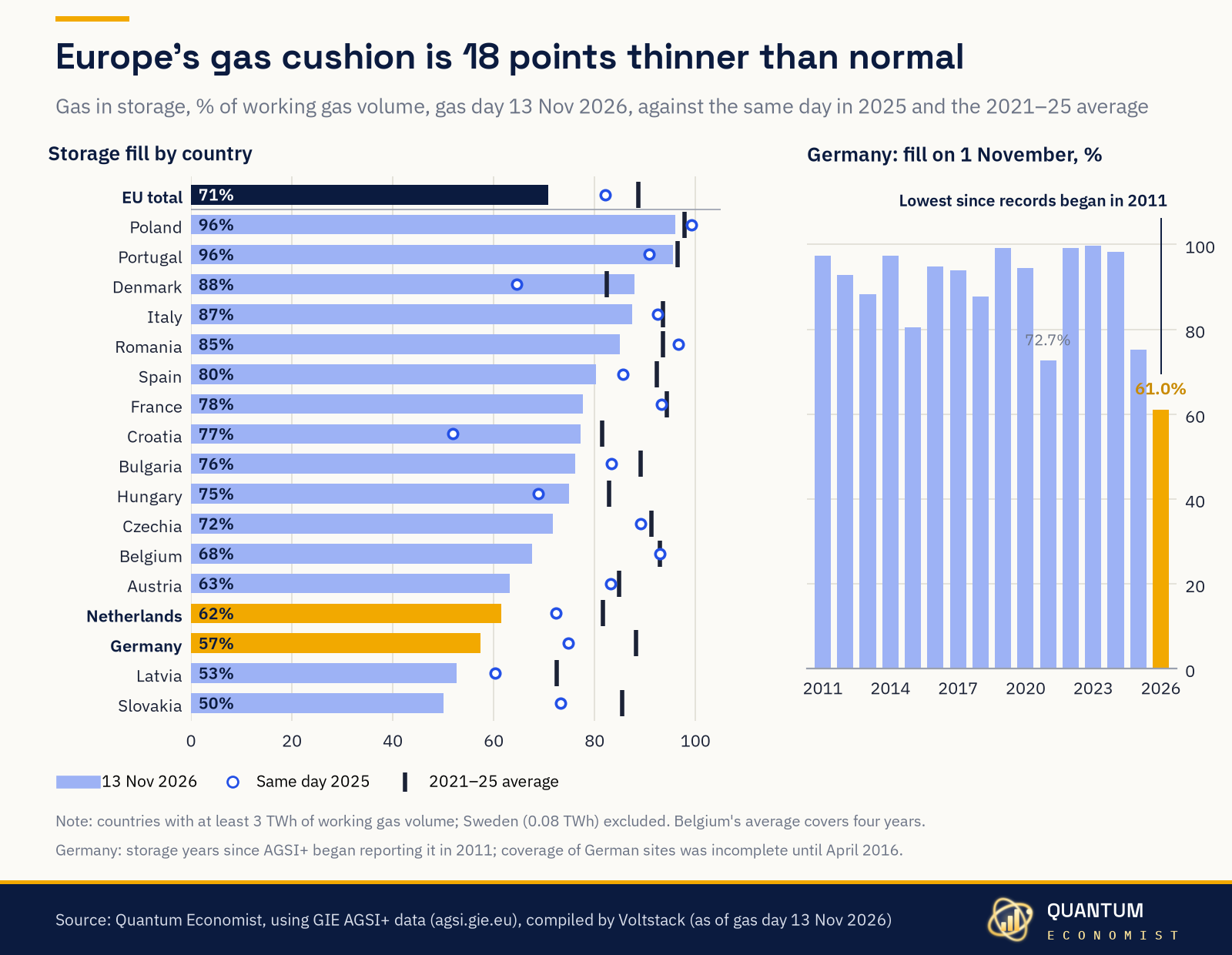
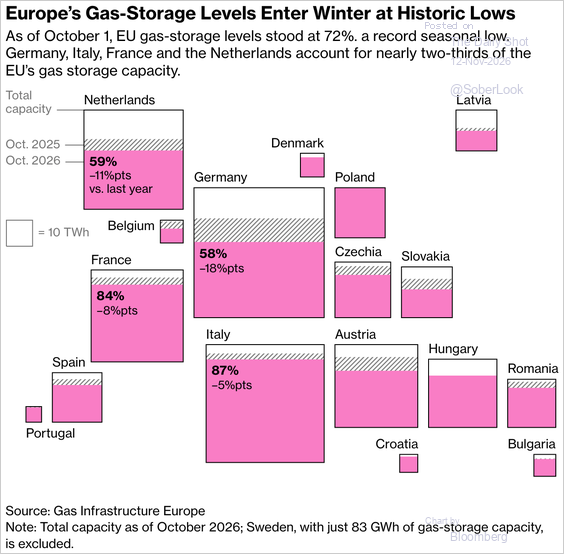
EU gas storage stood at 71% on 13 November, against an 89% average for the same day in 2021–25. Germany's fill on 1 November was its lowest since records began in 2011, and the Netherlands is at 62%. With buffers this thin, a cold snap would hit gas and power prices quickly.
· Source: Quantum Economist, using data from GIE AGSI+ (compiled by Voltstack)
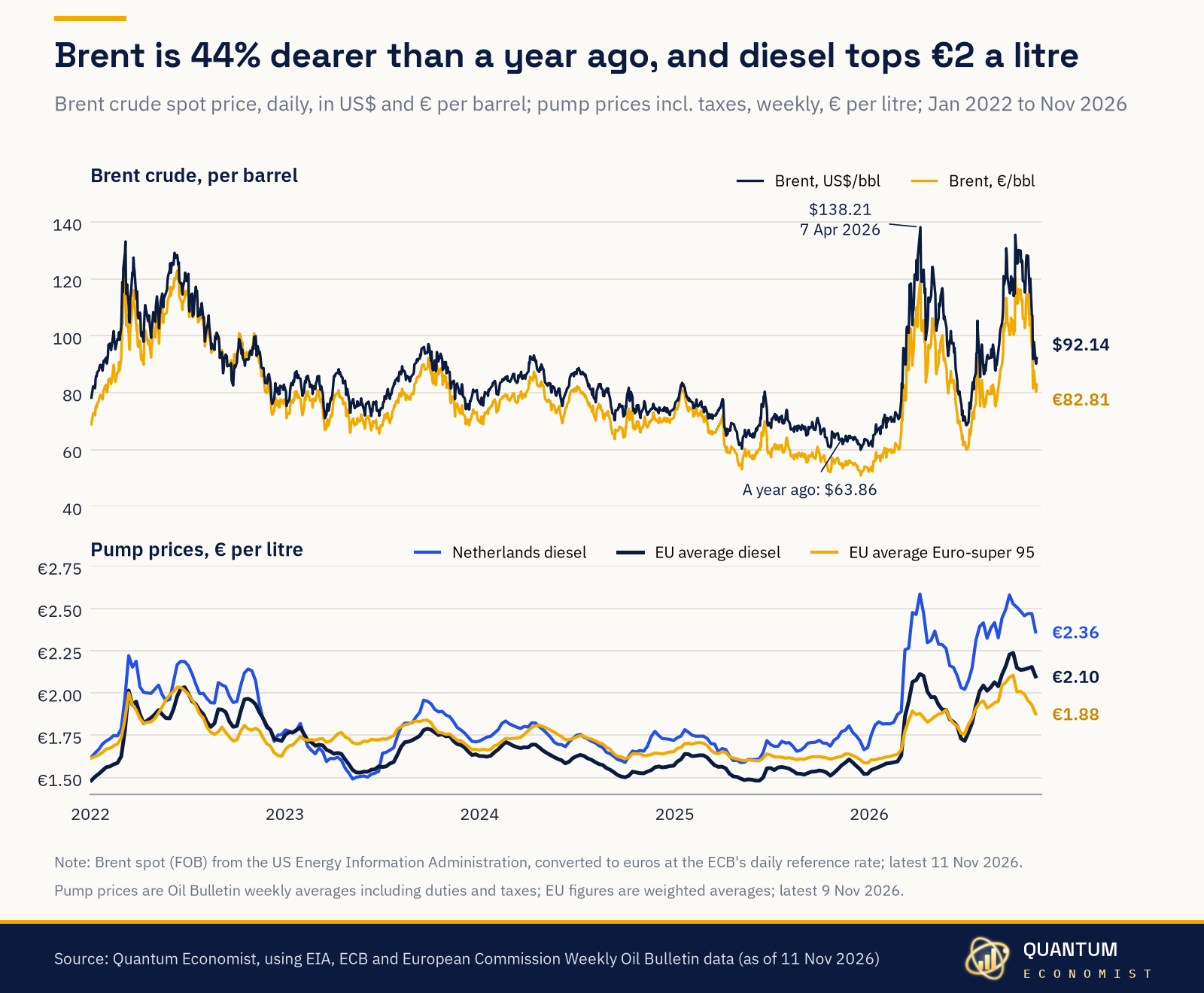
Brent crude is at about $92 a barrel, 44% higher than a year ago. At the pump, diesel now averages €2.10 a litre across the EU and €2.36 in the Netherlands, so the oil shock is reaching household budgets directly.
· Source: Quantum Economist, using data from the EIA, ECB and European Commission Weekly Oil Bulletin
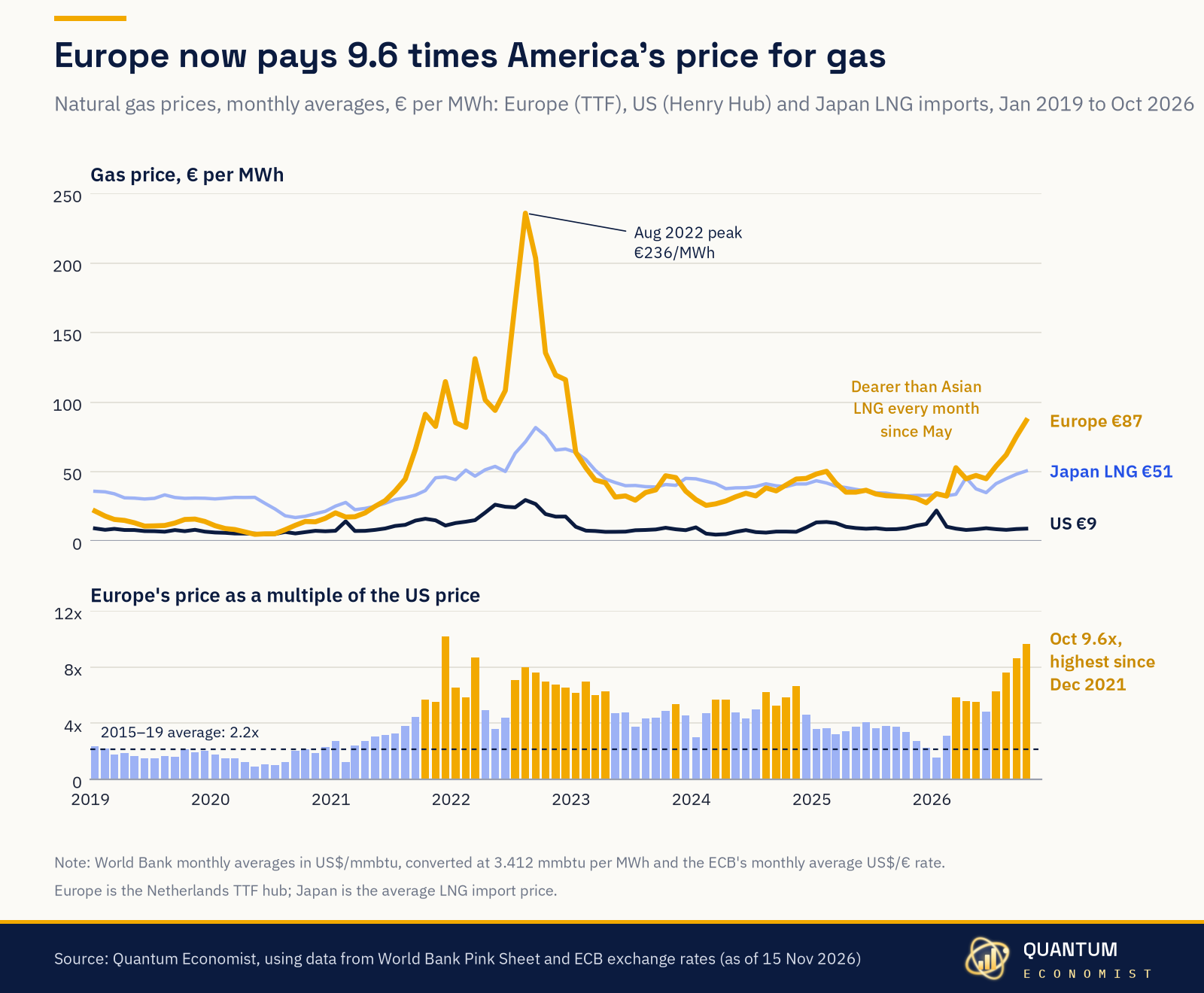
European gas (TTF) averaged €87/MWh in October, against €9 at Henry Hub in the US, the widest gap since December 2021 and far above the 2015–19 average of 2.2 times. Europe has also paid more than the Japan LNG import price every month since May, leaving Dutch households and industry far more exposed than American ones.
· Source: Quantum Economist, using data from the World Bank Pink Sheet and ECB
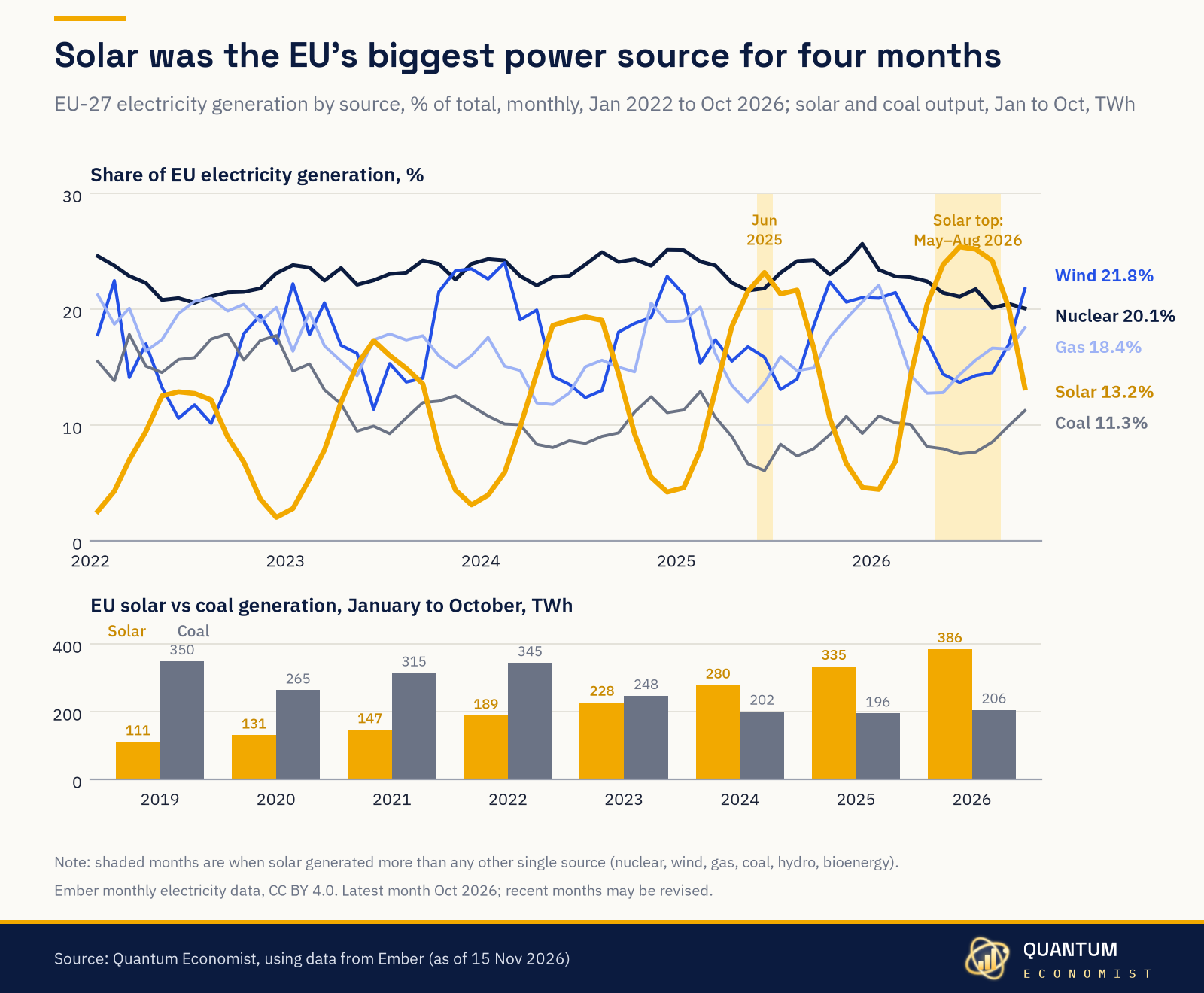
From May to August 2026, solar generated more EU electricity than any other single source, including nuclear. In 2025 that happened only in June. From January to October, solar produced 386 TWh, almost double coal's 206 TWh.
· Source: Quantum Economist, using data from Ember
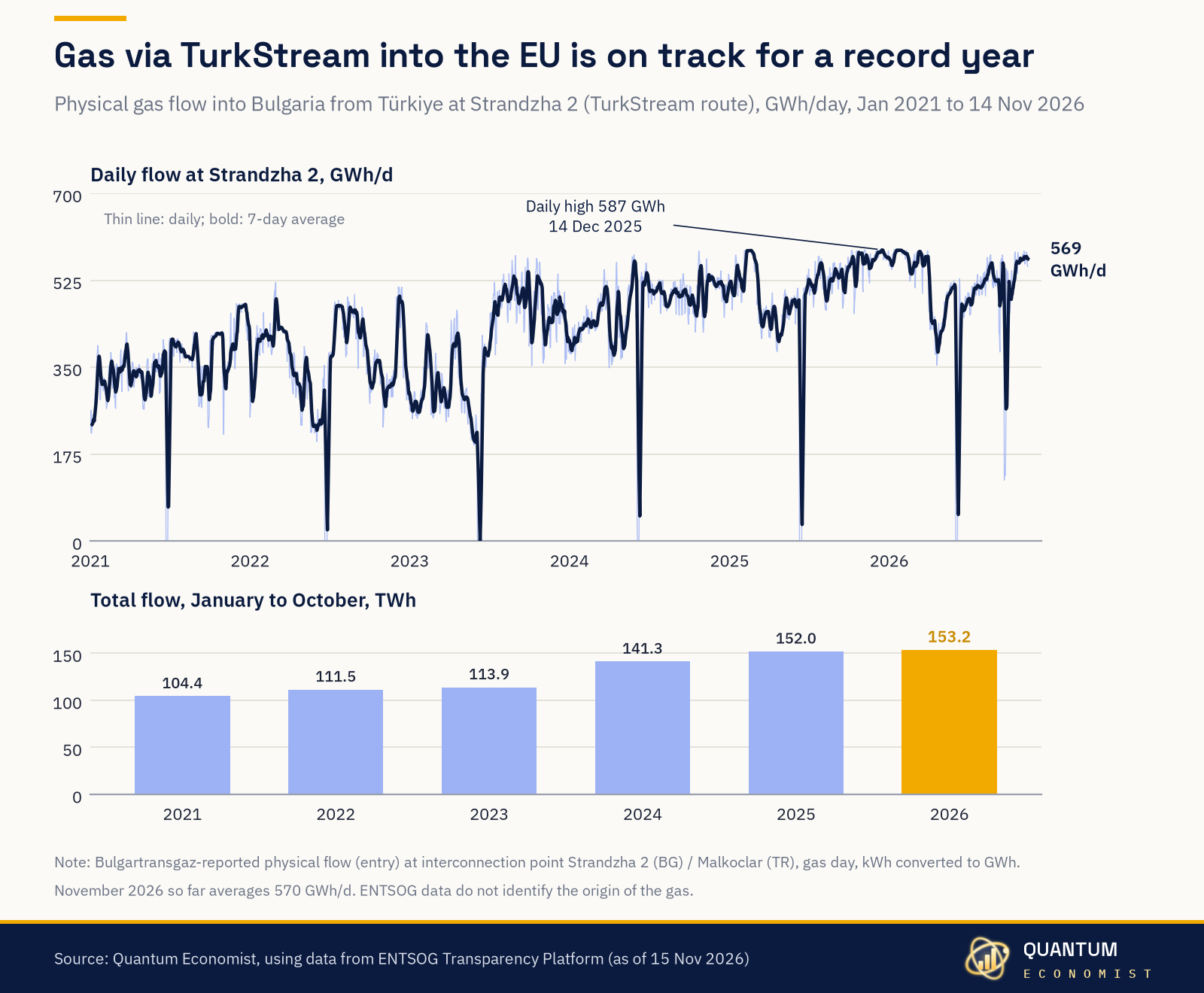
From January to October, 153.2 TWh of gas entered Bulgaria from Türkiye at Strandzha 2, the TurkStream route into the EU. That is the most for the period since the data begin in 2021. November flows average 570 GWh a day, close to the record of 587 GWh set in December 2025.
· Source: Quantum Economist, using data from ENTSOG Transparency Platform
EU gas storage stood at 72% on 1 October, a record seasonal low, with Germany at 58%, 18 points below a year earlier. Thin buffers leave European gas, power and carbon more exposed to cold spells and supply shocks this winter.
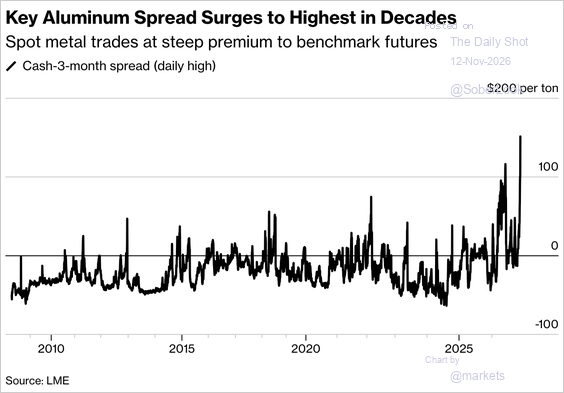
The cash-to-three-month aluminium spread has surged to its highest in decades as inventories tighten. Spot metal now trades at a steep premium to futures, a sign of real strain in the physical market.
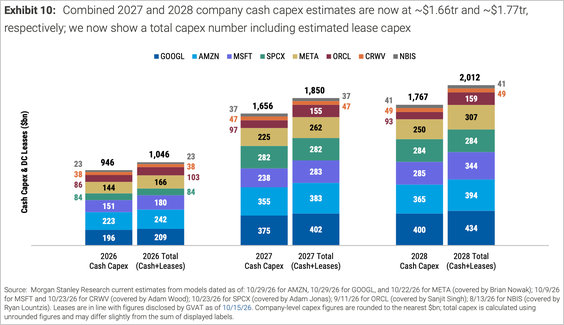
Morgan Stanley sees cash capex across hyperscalers and neoclouds rising from $946bn in 2026 to about $1.66tn in 2027 and $1.77tn in 2028. Spending on that scale means steady growth in data-centre power demand.
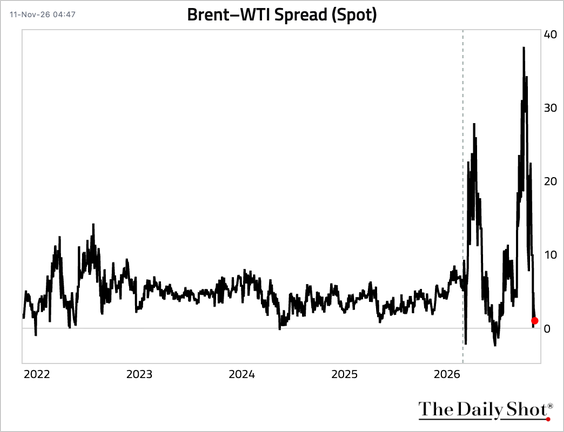
After big swings earlier this year, the Brent premium over WTI has collapsed back to around zero. The Atlantic crude market looks more balanced for now.
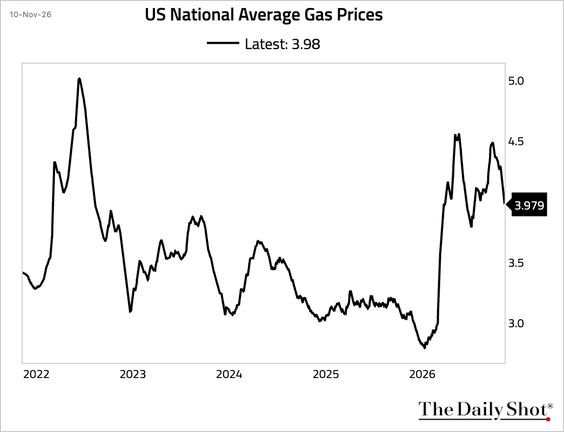
The national average fell below $4 a gallon for the first time since July but is still about 19% above seasonal norms amid lingering supply disruptions. Fuel costs remain a squeeze on US households.
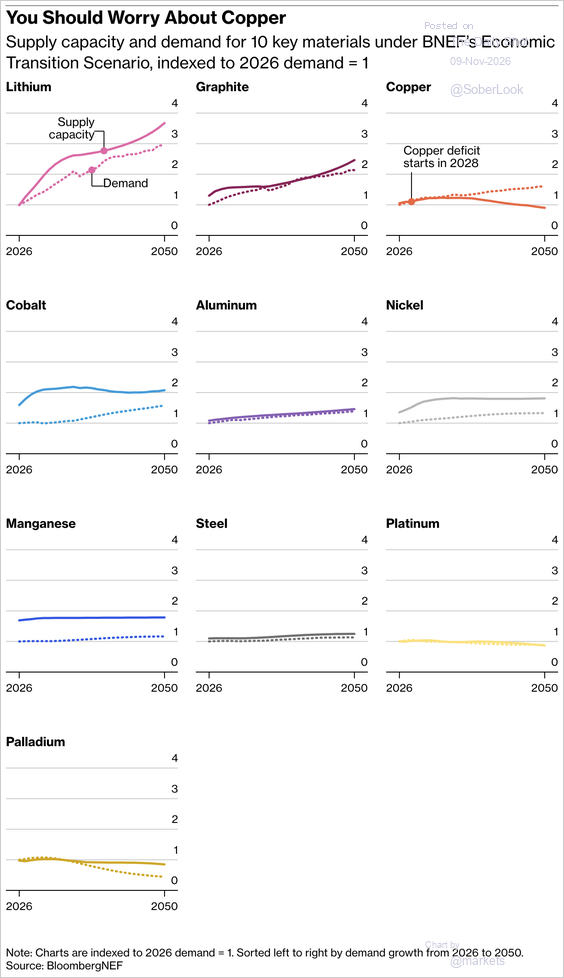
BloombergNEF expects investment to avert shortages in nine of ten critical minerals through 2050, but copper demand is set to exceed supply from 2028. Grids and electrification lean heavily on the metal.